

Cart
0
Last Updated: October 26, 2026
Quick Summary
To pack for off-grid camping, organize gear into three priority tiers, Tier 1 survival items like shelter and water, Tier 2 comfort essentials like stove and cooler, and Tier 3 optional items, then load your vehicle with heavy items low and centered, shelter and sleeping gear accessible on top, and frequently needed items last. Calculate water by trip length and group size, plan meals around fuel efficiency, and secure all loose items to prevent shifting on rough roads.
- Sort all gear into three tiers: Tier 1 survival and shelter, Tier 2 comfort and efficiency, Tier 3 optional and trip-specific items.
- Load vehicles with heavy items first low and centered, shelter and sleeping gear next, camp kitchen third, and frequently accessed items last on top.
- Bring a water filter, backup chemical tablets, and boiling pot as three treatment methods; identify resupply points on your map before departure.
Table of Contents
- Essential Shelter and Sleeping Gear for Off-Grid Camping
- Building Your Off-Grid Camping Checklist
- Clothing Layers and Weather-Ready Clothing
- Camping Food and Water Planning for Remote Locations
- Car Camping Packing List and Vehicle Organization
- Camping Toilet Options and Sanitation Essentials
- Choosing Your Off-Grid Gear at Roam Ready Outdoor
- Frequently Asked Questions
Essential Shelter and Sleeping Gear for Off-Grid Camping
Your shelter and sleeping system are the foundation of any off-grid camping trip.

Start with a tent that matches your environment and trip length. The National Park Service guidance on tent selection recommends checking waterproof ratings before purchasing; look for external waterproof factors of at least 2000mm to handle moderate rain without leaks.
Your sleeping bag matters just as much. The portable sleeping bag warm adults hiking provides the warmth and packability needed for multi-season off-grid trips.
Pair your sleeping bag with a sleeping pad or air mattress. Explore durable camping gear for off-grid dog trips to learn how to select equipment that handles the demands of remote camping.
Consider a compressible camping pillow: minimal pack space, dramatically better sleep quality miles from civilization.
Building Your Off-Grid Camping Checklist
A comprehensive off-grid camping checklist prevents mid-trip frustration over forgotten essentials. Learn how to choose durable camping gear for beginners to ensure each item on your checklist meets your needs. Build one that doubles as a packing sequence and loading plan, so the order you pack matches the order you need things at camp.
Start with a three-tier priority system
Sort every item into one of three tiers before you pack anything:
- Tier 1, Survival and shelter (never optional): tent, stakes, rain fly, sleeping bag, sleeping pad, water containers, water treatment, first aid kit, headlamp, navigation, and any prescription medications. If a Tier 1 item is missing, the trip does not leave.
- Tier 2, Comfort and efficiency (strongly recommended): camp stove and fuel, cookware, cooler, camp pillow, spare clothing layers, lantern, battery bank, and sanitation supplies. These make the trip workable rather than merely survivable.
- Tier 3, Optional and trip-specific: camp chairs, hammock, extra lighting, entertainment, and specialty cooking gear. Pack these only after Tier 1 and Tier 2 are confirmed and weighed.
Experienced off-grid campers lay out all three tiers, then remove at least one Tier 3 item before loading, separating essential from optional gear on paper, not at the trailhead.
Use a practical packing sequence
Pack in reverse order of use at camp:
- Load heavy base items first: water containers, cooler, and stove fuel go low and centered over the rear axle to keep the center of gravity low and improve handling on rough roads.
- Load shelter and sleeping gear next: tent, sleeping bags, and pads go in a dedicated zone so they are the first things you can grab at the campsite.
- Load the camp kitchen and food: sealed food containers, cookware, and utensils go together so meal setup is one trip, not five.
- Load frequently accessed items last and on top: first aid kit, headlamp, snacks, rain gear, and navigation tools should be reachable without unloading the vehicle.
- Secure everything: loose items shift on rough roads, damaging gear or becoming projectiles. Use straps, bins, or a cargo net.
Build the checklist around measurable planning
Write specific quantities on your checklist. For water, use a trip-length calculation rather than a single baseline number (see the food and water section). For food, count meals plus two extra snacks per person per day. For fuel, estimate stove burn time per meal and add a 25 percent buffer.
| Checklist Category | Key Items | Priority Tier | Planning Note |
|---|---|---|---|
| Shelter | Tent, stakes, rain fly, poles, footprint | Tier 1 | Confirm waterproof rating and pole condition before departure |
| Sleeping | Sleeping bag, pad, pillow, liner | Tier 1 | Match bag rating to expected low, minus a 10-15 degree margin |
| Water | Containers, filter, treatment tablets, backup | Tier 1 | Calculate gallons by trip length and group size |
| Food | Meals, snacks, cooking fuel, cooler | Tier 2 | Count meals plus extra snacks per person per day |
| Clothing | Layers, spare socks, rain gear | Tier 2 | Pack one full spare layer set per person |
| Lighting | Headlamp, lantern, batteries, power bank | Tier 2 | Budget power for the full trip length |
| Navigation | Map, compass, GPS device, backup battery | Tier 1 | Download offline maps before leaving service |
| Sanitation | Toilet paper, trowel, soap, trash bags, sanitizer | Tier 2 | Pack out all waste; carry extra bags |
| Safety and repair | First aid kit, medications, multitool, duct tape, recovery gear | Tier 1 | Check expiration dates and vehicle recovery equipment |
Keep a master checklist and a trip-specific overlay
Maintain one master checklist plus a short per-trip overlay for season, climate, and duration. A wet-weather overlay adds a tarp, dry bags, and a second rain layer; a cold-weather overlay adds an insulated pad, warmer bag liner, and hand warmers; a hot-weather overlay adds water capacity and electrolytes.
Clothing Layers and Weather-Ready Clothing
Off-grid camping exposes you to unpredictable weather, so prioritize layering over single heavy pieces, layers let you adjust as conditions change.
Start with a moisture-wicking base layer.
Bring spare clothes even if you expect to stay dry.
Pack rain gear that fits over your layers, so you can still zip up and move when weather turns.
REI's layering guide for outdoor activities emphasizes that the goal is temperature regulation and moisture management, not looking fashionable.
Understand page:4 to see how sleeping bag temperature ratings connect to your clothing choices.
Camping Food and Water Planning for Remote Locations
Food and water planning separates successful off-grid trips from survival situations. With no nearby stores, every meal and ounce of drinking water must come from what you pack or treat. Calculate by trip length and group size, then build in a resupply or treatment contingency.
Calculate water by trip length, not by habit
A common baseline is one gallon per person per day for drinking and basic cooking, but that rises with heat, altitude, and activity. A practical formula:
- Drinking water: 1 gallon per person per day as a minimum in moderate conditions.
- Cooking and cleaning: add 0.25 to 0.5 gallon per person per day.
- Hot or high-altitude conditions: add another 0.5 to 1 gallon per person per day.
- Emergency reserve: carry at least one extra gallon per person for the whole trip, untouched unless something goes wrong.
For a two-person, three-day moderate-conditions trip, that's roughly 6 to 7.5 gallons for drinking and cooking plus a 2-gallon reserve, about 8 to 9.5 gallons total. In desert or high heat, plan closer to 12 gallons. Write the total on your checklist and verify it against container capacity.
Plan treatment and resupply contingencies
If natural water sources exist (streams, lakes), bring a water filter to treat it safely. The CDC recommendations for water treatment while camping outline multiple methods: boiling, chemical treatment, and filtration all work, but filtration is fastest for high-volume needs.
A portable water filter like the outdoor camping water filter purifier removes bacteria, sediment, and rust from natural sources. At $20.67, it is affordable insurance against waterborne illness in remote locations.
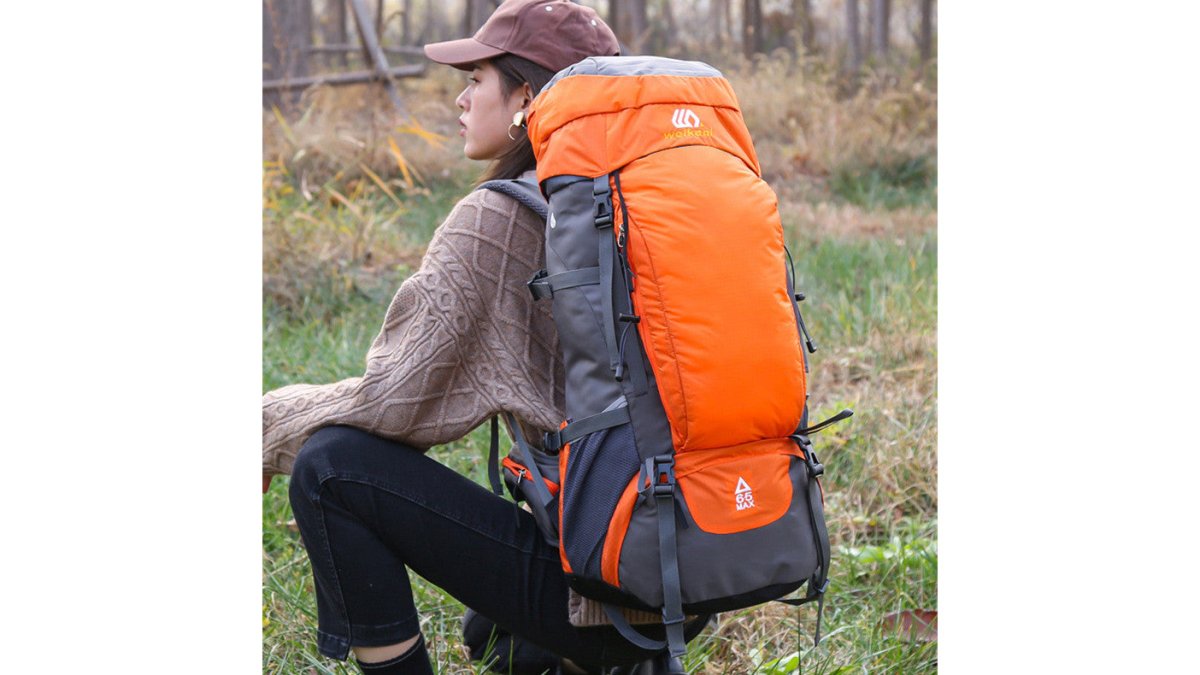
Outdoor Sports Backpack For Hiking →

Identify resupply points before departure, even off-grid trips often pass a ranger station, small store, or potable water spigot. Mark them on your map with hours; a resupply plan turns a water shortage from an emergency into an inconvenience.
Plan meals around fuel, cleanup, and storage
Plan meals requiring minimal cooking: one-pot meals, no-cook options, and simple stove recipes reduce fuel use and cleanup. Count meals plus two extra snacks per person per day, activity burns calories faster than expected.
Estimate stove fuel by burn time.
Store food in sealed containers to prevent wildlife access. Hanging food bags or bear canisters are not optional in bear country; they are survival equipment.
Pro Tip
Weigh your food and water before loading. Water is the heaviest single category on most off-grid trips, so calculating gallons first often changes how much optional gear you decide to bring.
Car Camping Packing List and Vehicle Organization
How you pack your vehicle determines whether setup is smooth or chaotic on arrival.
Load heaviest items (water, coolers, stove fuel) low and centered over the wheels to improve handling on rough roads.
Use the outdoor sports backpack for hiking at $43.64 to consolidate smaller items and keep your vehicle organized.

Create zones for shelter, sleeping gear, food and water, and cooking equipment so you can find what you need without digging.
Rough roads test your suspension and undercarriage.
Camping Toilet Options and Sanitation Essentials
Sanitation in remote locations requires planning many first-time off-grid campers overlook: no plumbing, no flush toilets, no municipal waste service.
Portable camping toilets work for longer trips or larger groups.
Bring biodegradable soap for washing. Regular soap contaminates water sources even when you're far from them.
Carry hand sanitizer and wet wipes as backup, off-grid camping means no running water for handwashing.
Pack more trash bags than you think you'll need. Leave no trace means packing out everything you bring in, including food scraps, packaging, and waste.
Choosing Your Off-Grid Gear at Roam Ready Outdoor
Roam Ready Outdoor carries the gear you need for successful off-grid camping trips, focused on durability where gear failure creates real problems.
The portable sleeping bag for adults at $66.30 combines warmth with packability.
For shelter, the double-layer aluminum pole tent at $96.98 handles weather that would fail cheaper tents.

Water safety matters in remote locations. Our outdoor camping water filter removes bacteria, sediment, and rust through two-level ultrafiltration.
These products work together to create a foundation for off-grid camping confidence.
Frequently Asked Questions
How much water should you bring for off-grid camping?
Water needs vary by trip conditions, activity level, and climate. A common guideline is 1 gallon per person per day for basic needs, though some guides recommend 2 or more gallons per person per day depending on temperature and physical exertion. For multi-day trips, consider carrying a water filter or treatment option to resupply from natural sources. Our Outdoor Camping Water Filter ($20.67) uses ultrafiltration to remove bacteria, sediment, and chlorine, letting you safely drink from streams and lakes.
What's the best way to organize a car camping packing list?
Group gear by category: shelter (tent, stakes, rain fly), sleeping (bag, pad, pillow), clothing (layers, spares), cooking (stove, utensils, fuel), lighting, navigation, first aid, and toiletries. Pack heavy items low and centered in your vehicle, secure everything to prevent shifting, and keep frequently accessed items (snacks, water, tools) within arm's reach. Use the Outdoor Sports Backpack ($43.64) for day trips and gear organization, its waterproof nylon construction protects essentials from moisture.
How do you handle toilet needs when camping off-grid?
Common camping toilet options include portable chemical toilets, DIY cat-hole methods (digging 6-8 inches away from water sources), biodegradable waste bags, or collapsible camping toilets. Always pack biodegradable soap, a trowel for digging, and trash bags for waste. Follow Leave No Trace principles by disposing of human waste at least 200 feet from water sources. Bring toilet paper, hand sanitizer, and wet wipes for hygiene maintenance in remote locations.
What food should you pack for a multi-day off-grid camping trip?
Choose shelf-stable, calorie-dense foods: granola, nuts, dried fruit, jerky, canned goods, pasta, rice, oats, and energy bars. Plan meals around a camp stove and bring lightweight cooking equipment. Pack enough food for your trip plus 10% extra for emergencies. Store food in airtight containers or bear-proof bags to prevent wildlife encounters. Consider meal planning by day to avoid overpacking perishables. Freeze-dried meals are lightweight alternatives for extended trips.
Off-grid camping trips demand gear you can trust. Roam Ready Outdoor provides durable equipment designed for remote environments where failure isn't an option. Our tents stay waterproof through heavy rain, our sleeping bags keep you warm on cold nights, and our water filters make natural sources safe to drink. Get started with Roam Ready Outdoor and pack for your next off-grid adventure with confidence.


