

Cart
0

Last Updated: November 17, 2026
Quick Summary
The decathlon vs backcountry gear comparison comes down to two retail models: Decathlon mostly sells its own house brands at low to mid prices, while Backcountry curates third-party labels at mid to premium prices. Decathlon suits beginners and budget kits, while Backcountry suits brand loyalists and high-end picks.
- Decathlon's own-brand model lets it design, manufacture, and distribute much of its gear to keep prices low.
- Decathlon gear holds up for car camping and first-time setups but falls short in extreme cold and long backcountry trips.
- Compare your pack, shelter, and sleep system by equivalent tier rather than choosing a store first.
- With house-brand gear you deal with one company for both returns and warranty claims.
- First-time car campers should choose Decathlon for the budget kit.
Decathlon or Backcountry? Build a Better KitDurable tents, packs, and cookware built to handle real trail conditions.
Shop Camping Gear
Table of Contents
- Decathlon vs Backcountry at a Glance
- Decathlon Camping Gear Review: Own-Brand Value and Trade-Offs
- Backcountry Camping Gear Review: Brand Depth and Premium Picks
- Affordable Backpacking Gear: What Your Budget Actually Buys
- Best Camping Sleeping Bags for Cold Weather: What to Check Before You Buy
- Shipping, Returns, and Warranties: The Fine Print That Changes the Math
- Use-Case Picks: Which Retailer Suits Your Trip
- Build Your Kit at Roam Ready Outdoor
- Frequently Asked Questions
Decathlon vs Backcountry at a Glance
The decathlon vs backcountry gear comparison comes down to two very different retail models. Decathlon builds and sells mostly its own house brands, while Backcountry curates third-party labels. The short answer is this: Decathlon is often the lower-priced option for entry-level gear, while Backcountry offers greater brand depth.
That gap is real, but it is not the whole story. Decathlon's own-brand approach lets it design, manufacture, and distribute much of its gear, which is how it keeps prices low, as GearJunkie's breakdown of Decathlon's house-brand model explains.
Price, Assortment, and Brand Model Compared
| Factor | Decathlon | Backcountry |
|---|---|---|
| Brand model | Mostly own-brand gear | Curated third-party labels |
| Price level | Low to mid | Mid to premium |
| Assortment | Deep in its own lines | Wide across many brands |
| Best for | Beginners, budget kits | Brand loyalists, high-end picks |
| Try before buying | Limited | Strong return policy |
Decathlon Camping Gear Review: Own-Brand Value and Trade-Offs
Where does that trade-off actually bite? If you want to understand how inexpensive gear tends to fail before you commit, read our guide on why cheap camping gear breaks.
Where Decathlon Gear Holds Up and Where It Doesn't
- Holds up: car camping, festival weekends, loaner gear, first-time setups
- Falls short: extreme cold, heavy rain over multiple days, long backcountry trips
- Watch out: the lowest price tier often skips the waterproofing and seam sealing you need in real weather
Backcountry Camping Gear Review: Brand Depth and Premium Picks
Outside's look at how house brands keep outdoor gear affordable notes that some house-brand pricing undercuts the industry standard, which is exactly the gap Decathlon exploits.
Affordable Backpacking Gear: What Your Budget Actually Buys
Affordable backpacking gear buys you a functional kit, not a fragile one, if you spend it in the right places. The trick is prioritizing the items that fail first: your pack, your shelter, and your sleep system. What most comparisons skip is the part readers actually want, what a specific budget buys at each retailer. Here is a category-by-category look at how the two retail models translate into real kits.
What a $300 Starter Kit Looks Like at Each Retailer
Watch out: comparing a Decathlon house-brand tent to a premium third-party shelter by sticker price alone hides the difference in fabrics, pole quality, and seam construction, match the tier, not just the category.
Pack Capacity, Materials, and Weight in Practice
For weekend trips, a 35L to 50L pack covers most needs. Nylon construction with a waterproof coating handles typical trail conditions well. Weight matters on long hikes, but so does fit and comfort, especially once the pack is loaded.
- 35L: weekend and day-and-a-half trips
- 50L+: multi-day backpacking
- Materials: nylon with a waterproof finish resists wear and light rain
- Fit: adjustable straps and load lifters reduce shoulder strain
The Unique Angle: Compare by Category, Not by Store
The most useful way to shop this comparison is to pick your three highest-consequence items, pack, shelter, sleep system, and compare equivalent tiers side by side rather than choosing a store first. A common pattern among experienced backpackers is to buy the shelter and sleep system at the tier where construction matters most, then save on cookware, accessories, and camp comfort items where the performance gap is small. That hybrid approach usually beats committing the whole kit to one retailer, and it is the comparison most buying guides never make.
Best Camping Sleeping Bags for Cold Weather: What to Check Before You Buy
The best cold-weather sleeping bag matches its temperature rating to your coldest expected night, not the average. Check the comfort rating, the insulation type, and how the bag pairs with your sleeping pad.
Down insulation packs smaller and lasts longer but costs more and loses warmth when wet. Synthetic insulation stays warm when damp and costs less, which suits budget-minded campers. Our guide to down vs synthetic sleeping bags breaks down that choice in detail.
Pad R-value matters just as much as the bag. A cold-rated bag on a thin pad still leaves you shivering, so match your pad's insulation to the ground temperature. Our walkthrough on how to choose sleeping pad R-value shows how to pair the two.
Shipping, Returns, and Warranties: The Fine Print That Changes the Math
Shipping, returns, and warranties can swing the real cost of a purchase more than the sticker price does. A cheaper item with a strict return window can cost you more if the fit is wrong. None of the top comparison results lay these policies out side by side, so this is where the real decision often gets made.
Returns: Window Length and Condition Rules
Watch out: footwear and shelters are the two categories where fit and waterproofing are hardest to judge online, so confirm whether opened or used gear still qualifies before you order, a return window that excludes used items is effectively shorter than it looks.
Warranties: House Brand Versus Third-Party Coverage
A practical implication: with house-brand gear you have one company to deal with for both the return and the warranty claim. With third-party gear you may resolve a defect through the brand directly, which can mean a longer process but sometimes stronger coverage on premium items. Keep your proof of purchase either way.
Shipping: Thresholds and the Real Cost of a Split Order
Free-shipping minimums can matter most when you are buying one small item. A single accessory below the minimum can carry a shipping charge that erases the price advantage you thought you had. The hybrid strategy, premium shelter and sleep system from one retailer, accessories from the other, only works if you clear each order's free-shipping threshold or accept the shipping cost as part of the comparison.
- Returns: check the window length and whether opened gear qualifies
- Warranties: house brands are covered by the retailer; third-party labels by the manufacturer
- Shipping: factor in free-shipping minimums on both sides, especially on single-item orders
- Membership: loyalty programs at either retailer can change return terms and shipping costs, so price the program against how much you actually buy
Use-Case Picks: Which Retailer Suits Your Trip
The right retailer depends on your trip, not on brand loyalty. Match the store to how you actually camp, and you will spend less and stay drier.
- First-time car camper: Decathlon for the budget kit
- Weekend hiker building up: mix both, premium boots and shelter
- Cold-weather backpacker: Backcountry for proven sleep systems
- Brand-loyal gearhead: Backcountry for specific premium labels
- Family buying multiple kits: Decathlon for volume savings
If you have just settled on a retailer and need a starter list, our guide to reliable gear for a first backpacking trip maps out exactly what to pack.
Build Your Kit at Roam Ready Outdoor
Choosing between two retailers is only half the decision. The other half is building a kit you trust in real conditions, and that is where Roam Ready Outdoor helps you finish the job.
We offer durable gear designed for comfort and performance, from shelters to cookware. Our Double-layer Aluminum Pole Waterproof Tent ($96.98) uses an aluminum support pole and a waterproof rating of 2000mm to 3000mm for the outer and bottom layers. The Camping Heat Exchange Cookware Set ($46.45) has a heat exchanger that the listing states can increase thermal efficiency by 30%. And our Outdoor Sports Backpack For Hiking ($43.64) is a nylon pack listed with waterproof features.
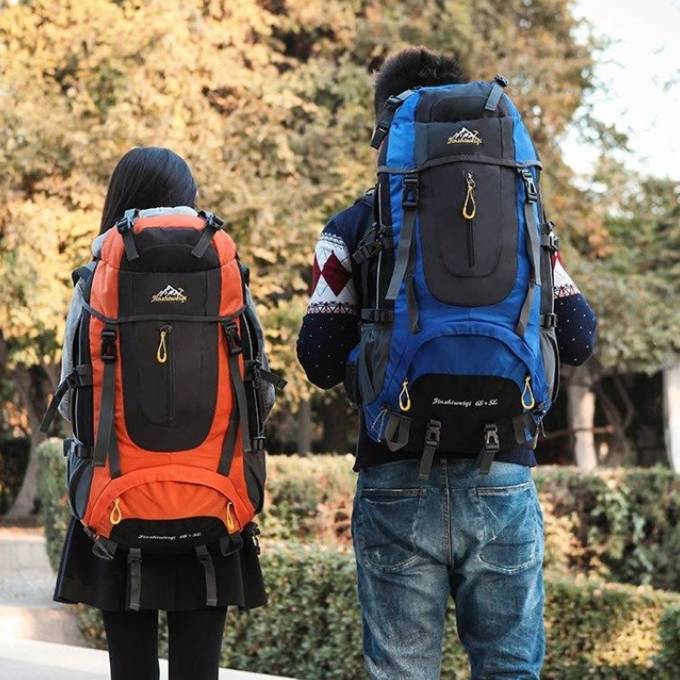
Start with the gear that keeps you dry and warm, then build outward. Get started with Roam Ready Outdoor and assemble a kit that holds up trip after trip.
The biggest challenge is not picking a retailer, it is matching each piece of gear to how you actually camp. Roam Ready Outdoor takes the guesswork out by stocking durable tents, packs, and cookware engineered for comfort and performance. Compare our waterproof shelters, load-reducing backpacks, and efficient cooksets, then build a kit you can trust on the trail.
Frequently Asked Questions
Is Decathlon or Backcountry better for camping gear?
It depends on what you need. Decathlon designs and manufactures much of its own gear, which keeps prices low: Backcountry carries a deeper roster of established premium brands. If budget and simplicity matter most, Decathlon wins; if you want to choose between specialist brands, Backcountry does.
Which retailer has more affordable camping gear, Decathlon or Backcountry?
Decathlon generally comes out cheaper on comparable categories because its own-brand model cuts out the middle layer of brand markup. For affordable backpacking gear, compare total cost including shipping and returns, not just the sticker price.
Is Decathlon gear durable enough for regular backpacking?
Check construction details yourself: fabric denier, seam sealing, pole material, and warranty terms tell you more than brand reputation alone.
What should I compare when buying camping gear from Decathlon or Backcountry?
Compare four things: the exact specification (waterproof rating, capacity, weight), the return window and warranty, the total delivered price, and whether the brand will still exist to honor a claim in three years. A $96.98 double-layer tent with a 2000mm to 3000mm waterproof rating is one option to compare on specification. Match the spec to your terrain and season, not to the logo.
Which retailer is better for beginner campers?
Beginners usually do better with fewer, simpler choices and lower financial risk. Decathlon's own-brand ranges are built for getting started, and . Backcountry suits buyers who already know what they want and are ready to pay for a specific brand's fit or feature set.


