

Cart
0
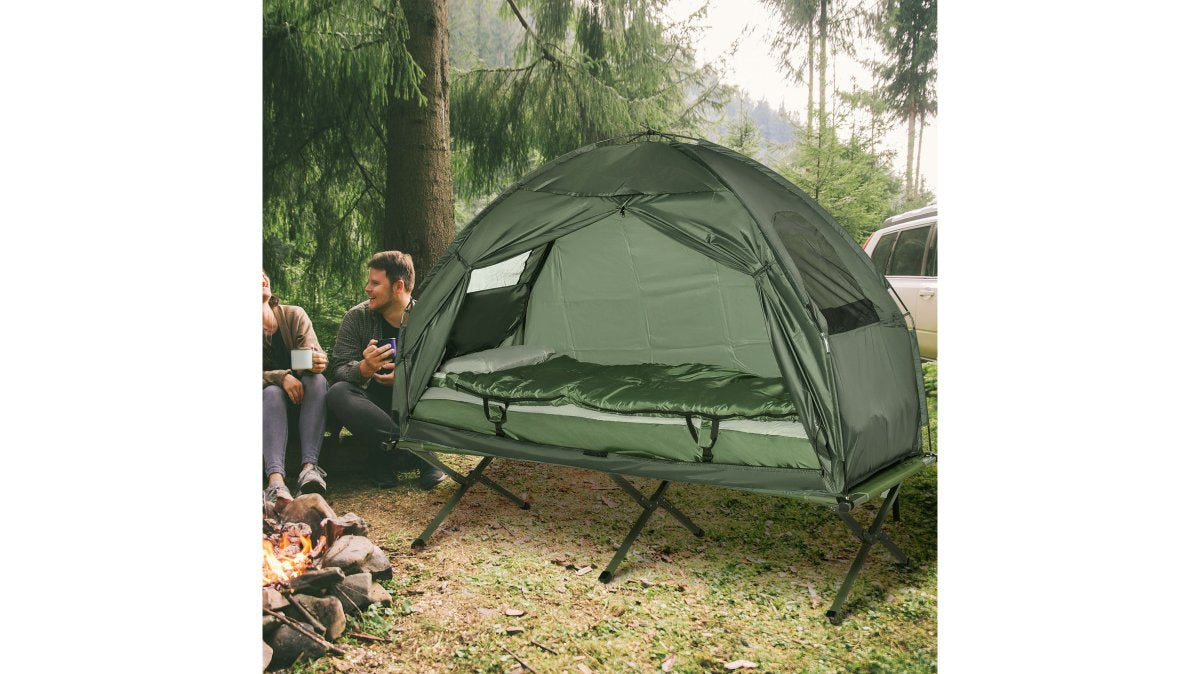
Table of Contents
- Tent Cot vs Tent and Cot: What's the Real Difference
- Integrated Tent Cot Systems: Single Solution for Elevated Sleep
- Camping Cot Inside Tent: Flexibility and Compatibility
- Camping Cot Weight and Packed Size: Portability Matters
- Comparison Table: Integrated vs Separate Setup
- Setup Time, Durability, and Real-World Use
- Which Setup Wins for Your Camping Style
- Frequently Asked Questions
Last Updated: October 6, 2026
Tent Cot vs Tent and Cot: What's the Real Difference
When you're planning a camping trip, the choice between an integrated tent cot and a separate setup of tents and cots matters more than most guides admit. The decision affects your comfort, packability, setup time, and total weight, and it's not as simple as "pick whichever is cheaper." The answer depends entirely on how you camp and what you value most.
An integrated tent cot combines the sleeping platform and shelter into one unit. A separate setup means buying a traditional tent and placing a camping cot inside it. Both approaches work, but they excel in different scenarios. Here's what you need to know to pick the right one for your style.


Integrated Tent Cot Systems: Single Solution for Elevated Sleep
An integrated tent cot is exactly what the name suggests: a complete sleep system where the tent and cot are engineered as one unit. You set it up once, and you have both shelter and an elevated sleeping surface in a single footprint.
The All-in-One Advantage
The biggest win with an integrated system is simplicity. You don't have to think about compatibility between a tent and a cot. You don't have to measure whether your cot fits inside your tent's sleeping area. You unpack one bundle, follow one setup process, and you're done.
Roam Ready Outdoor's Folding Camping Cot For Adults All In One Portable Bed exemplifies this approach. It includes the tent, cot, air mattress, sleeping bag, pillow, and carrying bag, everything arrives as a coordinated system designed to work together. The tent dimensions (76" L x 32" W x 41" H) are built around the cot dimensions (76" L x 30" W x 17" H), so there's no guessing whether they'll fit. The overall packed weight is 26 lbs, which is reasonable for a complete sleep system.
The integrated approach also means you get matched ventilation and weather protection. The tent is designed with the cot's elevation in mind. Airflow works the way the manufacturer intended because both components were engineered together.
Weight Capacity and Sleeping Configurations
Weight capacity matters more than people realize. If you're over the cot's limit, you're either uncomfortable or unsafe, there's no middle ground.
The Folding Camping Cot For Adults supports up to 225 lbs, which covers most single sleepers comfortably. The sleeping surface is elevated 17 inches off the ground, which keeps you away from cold earth and moisture. That elevation is one of the core benefits of cot sleeping: you stay warmer, drier, and more insulated than ground sleeping.
Air mattress thickness also affects comfort. The included air mattress in Roam Ready Outdoor's integrated system is 6 inches thick, which provides cushioning on top of the cot's fabric surface.
Camping Cot Inside Tent: Flexibility and Compatibility
A separate tent-and-cot setup gives you maximum flexibility. You choose a tent based on weather protection and space. You choose a cot based on comfort, weight capacity, and dimensions. Then you pair them together.
This approach works brilliantly if you already own a tent and want to upgrade your sleeping comfort. It also works if you need configurations that integrated systems don't offer: double cots, XL sizes, or specific tent features like vestibules for gear storage.
Sizing Your Cot to Your Tent
This is where most people get it wrong. You can't just buy any cot and assume it fits in any tent.
Measure your tent's interior floor dimensions first. A standard camping cot is typically 75-80 inches long and 25-30 inches wide. Interior dimensions are measured at the widest point, and tents taper toward the head and foot.
Roam Ready Outdoor carries tents designed for this pairing. The Double-layer Aluminum Pole Waterproof Tent ($96.98) measures 210 cm long by 260 cm wide (roughly 82" x 102"), giving you room for a cot with gear on either side. The Lightweight Camping Tent Double Layer ($86.49) offers similar proportions with different pole materials, fiberglass instead of aluminum, which affects weight and setup time.
When you're sizing, also consider the tent's interior height at the cot's location. If your tent is only 48 inches tall at the center, a cot that sits 17 inches high leaves just 31 inches of headroom. That's tight. If you move around much while sleeping or want to sit up, you'll feel cramped.
Ventilation and Weather Protection
Here's where separate setups have a real advantage: you can choose a tent with features that matter for your climate.
A tent with dual zippers on opposite sides creates cross-ventilation. A tent with ventilating windows that open and close lets you control airflow based on conditions. The Lightweight Camping Tent Double Layer includes zippers on both sides and ventilating windows on both sides, features that work whether you're using a cot or sleeping on the ground.
Weather protection depends on the tent's waterproof rating. The Double-layer Aluminum Pole Waterproof Tent has an external waterproof factor of 2000-3000mm and a bottom tent rating of 2000-3000mm. The Lightweight Camping Tent Double Layer goes higher: greater than 3000mm on the external and 2000-3000mm on the bottom. Both ratings handle moderate rain, but neither is designed for sustained heavy downpour without additional ground cover.
The integrated Folding Camping Cot For Adults All In One Portable Bed is water-resistant polyester with UV protection, but the manufacturer's note is important: it's meant for sunny, fair weather. For rain use, you need a ground cover because the tent isn't fully waterproof and cannot repel heavy rain. This is a meaningful limitation if you camp in wet climates.
A separate tent-and-cot setup lets you choose a tent with the weather protection you actually need.
Camping Cot Weight and Packed Size: Portability Matters
Weight and packed size are the constraints that push many people toward integrated systems.
Folding Camping Cot For Adults All In One Portable Bed →
The Folding Camping Cot For Adults packs down to a single carrying bag (26 lbs total). You carry one item. Setup involves assembling the cot frame, attaching the tent, inflating the air mattress, and arranging the sleeping bag. It's straightforward, but it's still multiple steps.
A separate setup requires you to pack and carry two items: a tent and a cot. A typical camping cot weighs 8-15 lbs. A two-person tent weighs 4-8 lbs. Combined, you're looking at 12-23 lbs for the sleep system alone, but spread across two packages.
The real difference is volume. An integrated system packs into one compressed bundle. A separate tent and cot might pack into two bags that don't compress as efficiently.
Roam Ready Outdoor's Double Deck Family Outdoor Camping Travel Tent weighs 2.8 kg (about 6.2 lbs) and packs to 54 x 13 x 12 cm. That's compact for a four-person tent. Paired with a lightweight cot, you'd have a portable separate setup that's still manageable for most camping styles.
Comparison Table: Integrated vs Separate Setup
| Factor | Integrated Tent Cot | Separate Tent + Cot |
|---|---|---|
| Setup Time | 10-15 minutes | 15-25 minutes |
| Compatibility | Guaranteed fit | Requires measurement |
| Single Sleeper | Excellent | Excellent |
| Double Sleeper | Not available | Available with two cots |
| Weight Capacity | Typically 225 lbs | Varies by cot model |
| Packed Weight | 20-30 lbs | 12-25 lbs (two items) |
| Weather Protection | Fair-weather rated | Customizable by tent choice |
| Ventilation Control | Fixed design | Adjustable windows/zippers |
| Cost | $86-192 | $96-113 (tent) + cot cost |
| Flexibility | Limited to single config | Multiple size/style options |
Setup Time, Durability, and Real-World Use
Setup speed matters when you arrive at camp with limited daylight or you're moving between sites frequently.
An integrated tent cot typically takes 10-15 minutes from bag to sleeping surface. You assemble the cot frame (snap-together poles), attach the tent fabric, clip the air mattress to the frame, and inflate it. The process is mechanical and straightforward. Most people get faster after the first two setups.
A separate tent-and-cot setup takes longer because you're doing two independent assemblies. Pitch the tent (8-12 minutes), unfold the cot (2-3 minutes), position the cot inside (1-2 minutes), add the air mattress or sleeping pad (2-3 minutes). Total: 15-25 minutes.
Durability depends on materials and use frequency. Integrated systems with aluminum poles and polyester fabrics (like Roam Ready Outdoor's offerings) handle repeated setup and takedown well. The connection points between the tent and cot frame are the stress zones.
Real-world durability also depends on storage. Drying everything before storage extends lifespan significantly, this applies equally to integrated and separate systems.
The Outdoor Double Layer Aluminum Pole Tent ($113.78) uses aluminum poles with 210T breathable cloth and B3 mesh, materials chosen for durability over extended use. The Lightweight Camping Tent Double Layer uses fiberglass poles.

Which Setup Wins for Your Camping Style
Choose an integrated tent cot if you value simplicity above all else. You want one package, minimal thinking, and guaranteed compatibility. You're car camping or doing established campground trips where weight isn't a constraint. You're a solo sleeper and don't need configurations for multiple people.
Choose a separate tent-and-cot setup if you need flexibility. You want to customize your tent based on weather protection or interior space. You're sleeping two people or want an XL cot.
The price difference is minimal. A separate setup using the Double-layer Aluminum Pole Waterproof Tent ($96.98) plus a quality camping cot runs roughly the same total cost.

Consider your climate too. If you camp in consistently dry conditions, an integrated fair-weather system works fine. According to the National Weather Service, many regions see moderate precipitation even during typical camping seasons, so weather protection matters more than casual campers realize.
The real difference between tents and cots comes down to this: integrated systems trade flexibility for simplicity, while separate setups trade simplicity for flexibility. Both work. Neither is objectively better, better depends on what you actually do when you camp.
Roam Ready Outdoor's integrated tent cot and standalone tent options give you both paths. Either way, you're sleeping elevated, protected, and comfortable. Add to Cart and get started on your next adventure.
Frequently Asked Questions
Are tent cots worth it compared to a separate tent and cot?
Tent cots offer convenience and simplicity, everything arrives as one unit, setup takes minutes, and you save space in your vehicle. However, they trade some flexibility for that all-in-one approach. Separate tents and cots let you mix and match sizes, upgrade pieces individually, and handle different weather conditions more effectively. The choice depends on your priorities: if you value quick setup and minimal gear, tent cots deliver. If you want maximum weather protection and customization, separate systems usually perform better.
Can you use a camping cot inside a regular tent?
Yes, you can place a camping cot inside a tent if dimensions align. Most standard tents accommodate a cot, but you need to verify floor space carefully. A typical single cot is roughly 30 inches wide and 76 inches long; measure your tent's interior and account for wall space. The real benefit is flexibility, you get ground clearance and elevation without buying an integrated system. Just ensure the cot doesn't compress the tent walls, which can stress seams and reduce weather protection.
What are the disadvantages of using a tent cot?
Integrated tent cots sacrifice weather resistance, most are water-resistant rather than fully waterproof, so heavy rain requires a ground cover. You're also locked into one size configuration; if the sleeping area doesn't fit your frame, you can't easily swap it out. Setup simplicity comes with reduced ventilation options compared to dedicated tents. Finally, if one component fails, the entire system may need repair rather than replacing just the cot or tent.
How do you choose a cot that fits inside your tent?
Start by measuring your tent's interior floor space in length and width, then subtract 6-12 inches on each side for wall clearance and movement. A standard single cot runs 76 inches long by 30 inches wide; a double cot is roughly 76 inches by 50 inches. Check the cot's packed dimensions too, a cot that fits when set up may not fit through your tent door when folded. Also verify weight capacity against your body weight plus any gear stored on the cot.
Do you need a sleeping pad on a camping cot?
Most camping cots provide basic cushioning through their fabric surface, so a pad isn't strictly necessary for comfort. However, an air mattress or pad adds insulation from cold air below the cot and extra cushioning for pressure relief. Many integrated tent cot systems include an air mattress for this reason. If you're using a bare cot in cold weather, a pad underneath helps retain body heat and improves sleep quality.

