

Cart
0
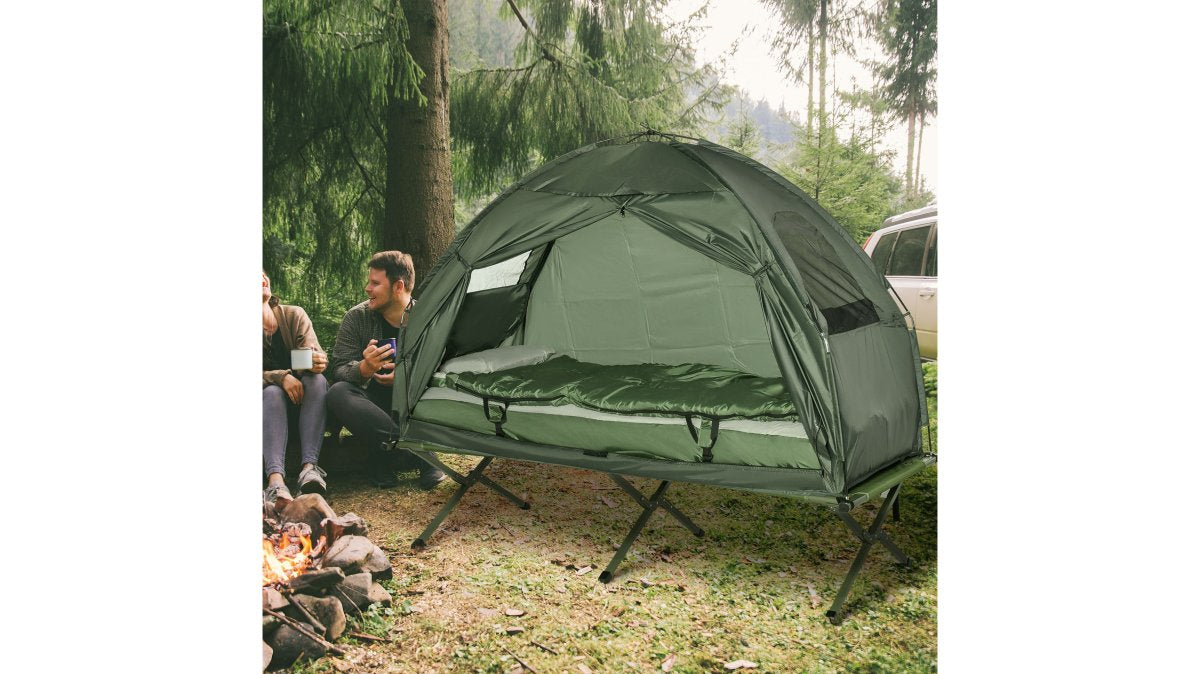
Table of Contents
- Understanding the Sleep System Concept
- Sleeping Bag Temperature Ratings Explained
- How to Choose a Sleeping Pad R-Value
- Best Camp Beds for Camping
- Insulation Types: Down vs. Synthetic
- Sleep System Weight-to-Warmth Ratio and Side Sleeper Considerations
- Moisture Management and Ventilation for Humid Climates
- Conclusion
- Frequently Asked Questions
Last Updated: October 2, 2026
Understanding the Sleep System Concept
A sleeping system integrates a sleeping bag, sleeping pad, and base layer clothing to keep you warm during outdoor sleep. These three elements work together as an interconnected whole, trapping body heat far more effectively than any single item alone.

Your sleeping bag insulates above you, but without a pad underneath, ground cold seeps away body heat. Base layers manage moisture that reduces effectiveness of both. Sleeping systems comfort depends on how well these three components work together, not on buying the most expensive bag or thickest pad independently.
Two people with identical sleeping bags can have completely different experiences because the difference usually isn't the bag, it's the pad, clothing, or layering. This framework separates uncomfortable nights from restful ones.

Sleeping Bag Temperature Ratings Explained
A sleeping bag's temperature rating indicates the lowest temperature at which it should keep an average sleeper warm. Most manufacturers publish a comfort rating (where most people sleep well) and a limit rating (the coldest temperature before serious discomfort).
The comfort rating represents realistic conditions, a 20°F comfort rating means you'll sleep well at 20°F. The limit rating, often 10-15°F colder, is a survival threshold, not a comfort target.
Temperature ratings assume you're using a sleeping pad with adequate insulation. A 20°F bag paired with a thin pad won't perform at that temperature because ground cold undermines the bag's insulation.
For warm-weather camping (above 50°F), use a lighter bag. For three-season use, aim for a 20°F comfort rating. Winter camping demands 0°F or lower ratings with a high R-value pad.
How to Choose a Sleeping Pad R-Value
R-value measures a sleeping pad's insulation resistance, how effectively it blocks ground cold. Higher R-values mean better insulation and warmer sleep, yet many people overlook it.
R-value works on a simple scale: R-1 to R-2 for summer camping, R-3 to R-5 for three-season use, and R-6+ for winter camping. A 20°F bag paired with an R-2 pad will lose significant warmth to ground cold.
Sleeping pad materials determine R-value: closed-cell foam offers R-3 to R-5, air mattresses with reflective linings reach R-4 to R-6, and down-insulated air pads exceed R-8.
A common mistake is assuming thicker pads have higher R-value. Insulation quality matters more than thickness. Check the manufacturer's stated R-value rather than relying on thickness alone.
Best Camp Beds for Camping
Elevated camp cots represent a fundamentally different sleeping system architecture than ground-based setups.
How Cots Change the Insulation Equation
When you sleep on a cot, the air gap beneath you becomes your primary insulation layer.
Cot sleepers benefit from sleeping bags with draft collars and foot boxes that seal tightly.
Weight, Packability, and Trip Type
Cots range from ultralight aluminum models (2-3 lbs) to heavy-duty canvas cots (8-12 lbs).
Durability and Long-Term Cost
Aluminum-frame cots last 8-10 years; canvas cots last 10-15 years but weigh more.
When evaluating cots, check weight capacity, frame material (aluminum is lighter, steel more durable), and water-resistant fabric.
Integration with Sleeping Systems
A cot-based system still requires a sleeping bag and base layers, but the pad becomes optional for insulation.
The trade-off is mobility.
Insulation Types: Down vs. Synthetic
Down insulation, the fluffy feathers from ducks and geese, traps air exceptionally well and compresses into tiny bundles, making down bags ultralight and packable. Synthetic insulation uses polyester fibers to create similar air pockets but without the compressibility.
Down excels in cold, dry conditions and lasts 10-15 years with proper care. The downside: down loses insulation when wet and is expensive.
Synthetic insulation performs better in damp conditions and humid climates. It retains some warmth even when wet, making it the safer choice for variable weather or high-moisture environments. Synthetic bags also cost less upfront.
Folding Camping Cot For Adults All In One Portable Bed →
For humid climates and rainy seasons, synthetic or cotton-blend insulation is practical. For dry, cold backcountry trips, down's warmth-to-weight ratio wins. Climate and trip duration should drive this decision.
Sleep System Weight-to-Warmth Ratio and Side Sleeper Considerations
Weight-to-Warmth Ratio: The Backpacker's Optimization Metric
Weight-to-warmth ratio measures insulation per ounce of gear (temperature rating divided by packed weight).
Down dominates weight-to-warmth calculations because it compresses to one-third the volume of synthetic while maintaining warmth.
Weight-to-warmth optimization assumes dry conditions.
For three-season backpacking in dry climates, aim for a weight-to-warmth ratio of 8-12°F per pound.
Side Sleeper Insulation Compression and Gear Selection
Side sleepers face a biomechanical challenge: body weight compresses insulation on the side you're lying on, reducing loft and insulating value.
This compression effect means a 20°F bag might only perform at 25-28°F for a side sleeper, a 5-8°F penalty. The solution requires multiple adjustments:
Bag Design and Fill Power: Mummy bags with high-loft insulation (down 700+ fill power or premium synthetic) resist compression better. Semi-rectangular or rectangular bags allow side sleepers to shift position and distribute weight across a larger area, reducing compression.
Pad Thickness and Firmness: Side sleepers benefit from pads with 3-4 inches of thickness and medium-firm firmness.
Pad R-Value Interaction: A pad's R-value and thickness are independent.
Base Layer Strategy: Side sleepers lose more heat through compression, so base layer choice is critical.
Testing and Adjustment: Test your sleep system in conditions close to your target temperature.
Moisture Management and Ventilation for Humid Climates
Condensation inside your sleeping bag kills comfort in humid environments. Warm breath and body moisture condense on the inside when outside air is cold and damp, reducing insulation effectiveness and creating a clammy environment.
Ventilation solves this problem. Some bags feature ventilation ports or mesh panels that allow moisture to escape. Two-way zippers let you adjust ventilation: fully closed for maximum warmth, partially open to release excess moisture.
For humid climates, sleeping pad choice matters as much as the bag. Air mattresses trap less moisture than closed-cell foam because they don't absorb water. Pair a waterproof air mattress with a breathable sleeping bag to address the two main moisture sources.

Base layers control humidity. Merino wool or synthetic materials wick moisture; cotton absorbs and holds it. In humid conditions, avoid cotton sleep clothes. The integrated approach, breathable bag, moisture-resistant pad, and synthetic base layers, creates a system that stays dry and comfortable.
| Component | Humid Climate Best Practice | Why It Matters |
|---|---|---|
| Sleeping Bag | Breathable synthetic or cotton blend | Allows moisture vapor to escape |
| Sleeping Pad | Air mattress with TPU lining | Resists moisture absorption |
| Base Layer | Merino wool or synthetic | Wicks moisture from skin |
| Ventilation | Partially open zippers at night | Reduces internal condensation |
Conclusion
The best sleeping systems aren't built by buying the most expensive bag or thickest pad in isolation. They're built by understanding how sleeping bags, pads, and base layers work together. Temperature ratings matter only when paired with appropriate R-value pads. Insulation type should match your climate and trip duration.
At Roam Ready Outdoor, our integrated approach, like the Folding Camping Cot For Adults All In One Portable Bed that combines tent, cot, air mattress, and sleeping bag, removes the guesswork. Whether you're a first-time camper overwhelmed by options or an experienced backpacker optimizing your setup, the principle remains the same: choose components that complement each other, not components that look good on spec sheets.

Start with your intended climate and trip type. Select a sleeping bag with an honest comfort rating for those conditions. Choose a pad with an R-value that matches your ground temperature expectations. Add moisture-managing base layers. Test the system on a short trip before committing to longer adventures. The confidence that comes from knowing you'll sleep warm and dry transforms how you experience the outdoors, and that's what separates memorable trips from miserable ones.
Sleeping systems comfort is the foundation of every successful outdoor adventure. Roam Ready Outdoor offers complete sleeping solutions, from individual components like the Inflatable Honeycomb Camping Sleeping Mattress Mat and Automatic Inflatable Camping Pillow to integrated systems that handle everything at once. Our gear is engineered for durability and warmth across diverse conditions. Add to Cart and build the sleeping system that matches your adventure style.
Frequently Asked Questions
What is the most comfortable sleeping system for camping?
A complete sleeping system combines three elements: a sleeping bag with appropriate temperature rating, a sleeping pad with sufficient R-value for ground insulation, and a base layer or clothing system. The Folding Camping Cot For Adults All In One Portable Bed ($192.54) integrates a tent, cot, air mattress, and sleeping bag, eliminating the need to assemble separate components. For those building a system piece by piece, pair a sleeping bag like the Thickened Down-filled Sleeping Bag ($104.53) with the TPU Thickened Double Air Mattress ($72.35) to create a warm, insulated setup that prevents heat loss to the ground.
How do you choose the right R-value for a sleeping pad?
R-value measures a sleeping pad's thermal resistance and ability to insulate you from cold ground. Match your pad's R-value to your typical camping conditions: R-values of 2-3 work for summer camping above 50°F, R-values of 4-6 suit spring and fall trips (40-50°F), and R-values above 6 are necessary for winter camping. The Inflatable Honeycomb Camping Sleeping Mattress Mat ($29.99) provides basic cushioning for fair-weather trips, while the TPU Thickened Double Air Mattress ($72.35) offers greater thickness and insulation for cooler seasons. Always pair your pad choice with a sleeping bag rated for the lowest temperature you expect.
What is the difference between down and synthetic insulation in sleeping bags?
Down insulation (like the 900g duck down in the Thickened Down-filled Sleeping Bag at $104.53) compresses tightly, offers exceptional warmth-to-weight ratio, and lasts decades with proper care, but loses insulation when wet and costs more. Synthetic insulation (used in the Camping Flannel Sleeping Bag Thickened at $93.34) retains warmth even when damp, dries quickly, and costs less, but is heavier and bulkier for the same warmth. Choose down for backcountry trips where weight matters and conditions stay dry; choose synthetic for humid climates, frequent use, or budget-conscious camping.
Can I use a camping cot instead of a sleeping pad?
A camping cot elevates you off the ground and provides cushioning, but it does not insulate you from cold air beneath it. The Folding Camping Cot For Adults ($192.54) includes an air mattress that provides some insulation, yet a dedicated sleeping pad with an R-value still performs better in cold conditions. For summer car camping or mild weather, a cot with an air mattress works well; for backcountry trips or cold nights, pair the cot with a sleeping pad underneath or choose a sleeping bag rated for the expected temperature.

