

Cart
0
Last Updated: October 23, 2026
Quick Summary
Is an inflatable tent worth the cost depends on how often you camp. Inflatable tents cost about 20% more than pole tents but offer faster setup and more interior space, making them worthwhile for frequent campers taking 20+ trips yearly. Occasional campers taking 2-8 trips annually typically save money with pole tents.
- Inflatable tents range from $700 to $6,800 for premium models, about 20% more than equivalent pole tents.
- Setup takes 15-25 minutes for inflatable tents versus 45-60 minutes for pole tents.
- Valves and seams are more common failure points than air beams themselves in inflatable tents.
- Occasional campers taking 2-8 trips annually typically save money choosing pole tents over inflatable options.
Table of Contents
- Inflatable Tent vs Pole Tent: The Real Differences
- Purchase Price and Cost-Per-Use Analysis
- Setup Speed and Ease: Inflatable Beam Advantages
- Inflatable Tent Durability: What the Data Shows
- Inflatable Tent Pros and Cons: Full Breakdown
- Inflatable Tent Repair: What Happens When It Fails
- Is an Inflatable Tent Worth It for Your Situation?
- Frequently Asked Questions
Inflatable Tent vs Pole Tent: The Real Differences
Is an inflatable tent worth the cost? That's the question every camper eventually asks. The short answer: it depends on how often you camp and what matters most to you.
Inflatable tents typically cost about 20% more than equivalent pole tents, ranging from $700 to $6,800 for premium models GEERTOP's 2026 inflatable vs. pole tent comparison. The global inflatable tent market was valued at $1.2 billion in 2025 and is projected to reach $2.66 billion by 2036 Future Market Insights market analysis, signaling that more campers are making the switch. But popularity doesn't equal value for your specific situation.
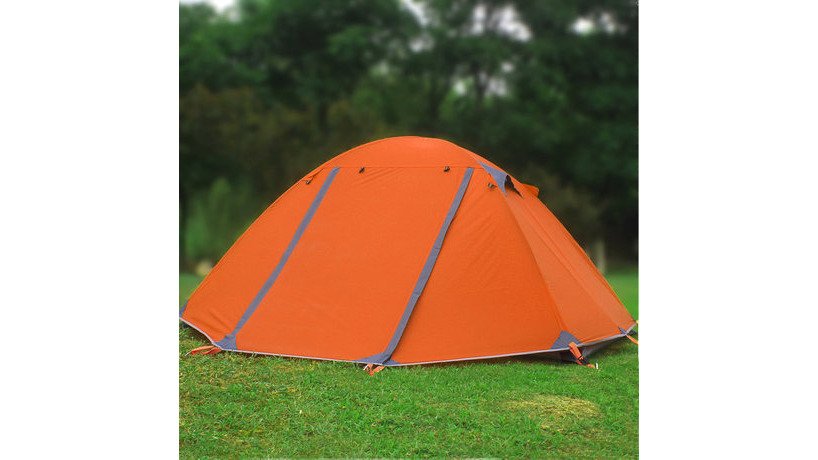
The core difference is structure. Pole tents use rigid aluminum or fiberglass poles to create tension and hold their shape; inflatable tents replace those poles with air beams. That shift changes setup time, portability, durability, and repair options. See a concrete example with the Outdoor Double Double Layer Aluminum Pole Waterproof Tent to evaluate pole tent construction against inflatable alternatives.

Purchase Price and Cost-Per-Use Analysis
The useful number is total cost of ownership divided by the trips you'll actually take.
What Inflatable Tents Actually Cost
At Roam Ready Outdoor, we carry both types so customers can compare directly. Our pole tent options start at $64.99 for the Full-automatic Quick-opening Tent and go up to $113.78 for the Outdoor Double Layer Aluminum Pole Tent.

The Costs Competitors Leave Out
A fair total-cost-of-ownership comparison includes five items beyond the tent:
- Pump. Most inflatable tents ship with a manual pump, but a quality floor pump or rechargeable electric pump is a common upgrade. Budget $30 to $120 depending on type and brand.
- Repair kit. Many tents include a basic patch kit. A more complete field kit with adhesive, patch material, and valve tools typically runs $15 to $40.
- Replacement air beams. Air beams are replaceable on most quality inflatable tents. A single replacement beam commonly costs $80 to $250 depending on tent size and brand, and availability varies by manufacturer.
- Maintenance time. Inflatable tents require pressure checks, valve inspection, and careful storage. That is time rather than cash, but it is a real cost for frequent campers.
- Resale value. Inflatable tents hold resale value reasonably well when clean and complete, but the market is thinner than for pole tents. Expect a wider range of outcomes.
Breaking Down Cost Per Use
The cost-per-use formula is simple: total cost of ownership divided by trips actually camped. Three scenarios:
Scenario A: Occasional camper. Two weekend trips per year, five-year ownership horizon, ten trips total.
- Inflatable tent: $2,000 tent + $60 pump + $25 repair kit = $2,085. Cost per trip: about $209.
- Pole tent: $1,500 tent + $20 spare pole section = $1,520. Cost per trip: about $152.
The inflatable premium buys convenience on ten setups, hard to justify on cost alone.
Scenario B: Frequent family camper. Fifteen trips per year, five-year horizon, seventy-five trips total.
- Inflatable tent: $2,085 total. Cost per trip: about $28.
- Pole tent: $1,520 total. Cost per trip: about $20.
The gap narrows to roughly $8 per trip, ask whether faster setup and easier pack-down are worth $8 to you. For many families managing multiple tents and children, the answer is yes.
Scenario C: Long-stay camper. Four extended trips per year of a week or more, five-year horizon, twenty trips total.
- Inflatable tent: $2,085 total. Cost per trip: about $104.
- Pole tent: $1,520 total. Cost per trip: about $76.
Long stays change the math: setup speed matters less because you set up once and stay put, but interior space and comfort matter more.
Key Takeaway
The break-even point is not a single number. It depends on trips per year, years of ownership, and whether you count your time. Run your own denominator honestly before you decide the premium is or is not worth it.
What the Premium Actually Buys
The decision point is straightforward. If you camp often enough that the per-trip premium falls below the value you place on your time and convenience, the inflatable tent pays off. If you camp a handful of times a year, the pole tent usually wins on total cost of ownership. SunnyFeel Outdoor's camping frequency analysis makes a similar point about matching gear cost to actual use patterns.
Setup Speed and Ease: Inflatable Beam Advantages
Inflatable tents are marketed as faster-pitching, and that claim holds up. Where pole tents require threading poles through sleeves, securing corners, and tensioning guy lines, inflatable tents need just three steps: unpack, inflate, anchor.
Setup speed matters when you arrive after dark, when weather turns bad mid-trip, or when you're managing multiple tents for a family. For casual weekend campers who arrive with daylight and take their time, the convenience premium doesn't justify the cost difference.
Double-layer Aluminum Pole Waterproof Tent →
Inflatable Tent Durability: What the Data Shows
Durability is where inflatable tents face legitimate skepticism. Here's what's established and the failure modes to judge before you buy.
Puncture Risk and Air Leak Prevention
The bigger risk is valve failure. A faulty valve can cause slow leaks that compound over time, and one that won't hold pressure can make the tent unusable in the field. Premium inflatable tents use redundant valve systems so a single failure doesn't compromise the whole tent.
Long-Term Reliability: What Owners and Testers Report
- Air beams themselves are rarely the first failure. Multi-layer beams with reinforced seams tend to hold pressure well when stored dry and inflated to the manufacturer's recommended pressure.
- Valves and seams are the more common weak points. Slow leaks at valves, seam tape lifting, and abrasion at high-stress anchor points show up more often than beam blowouts.
- Failure rates rise with improper storage. Storing a tent compressed and damp, or over-inflating in cold conditions and then letting it warm in the sun, accelerates wear.
- Repair frequency is low but nonzero. Owners who camp frequently commonly report at least one patch or valve service over several seasons. That is a maintenance expectation, not a defect.
Watch Out
Be skeptical of any durability claim that does not say how the tent was tested, for how long, and under what conditions. "Five years of regular use" means very different things for a weekend camper and a full-time traveler.
How Inflatable and Pole Tents Fail Differently
The real durability question is whether inflatable tents fail faster than pole tents, and in ways that matter on a trip.
- Pole tent failure is usually visible and field-repairable with a spare section.
- Inflatable tent failure is often a slow leak that you discover over hours, and the fix may require adhesive cure time.
- Catastrophic failure is rare in both, but an air beam that loses pressure in high wind is a more serious shelter problem than a single bent pole.
What to Inspect Before You Buy
- Beam construction. Look for multi-layer fabric, reinforced seams, and protected beam sleeves.
- Valve design. Redundant or replaceable valves are a meaningful durability advantage.
- Repair support. Confirm that replacement beams and valves are available for purchase, not just covered under warranty.
- Warranty terms. Read what the warranty actually covers. Many exclude punctures and normal wear, which are the most likely failures.
- Storage guidance. A manufacturer that specifies dry storage and pressure limits is telling you the tent is sensitive to misuse.
Inflatable Tent Pros and Cons: Full Breakdown
Where Inflatable Tents Win
Flexible interior layout. Without rigid poles taking up floor space, inflatable tents offer more usable living area in the same footprint.
Where Pole Tents Still Lead
Easier to inspect before purchase. You can see and feel a pole tent's construction quality immediately. Air beams hide their internal structure until you inflate them.
Inflatable Tent Repair: What Happens When It Fails
Inflatable tents require more active maintenance than pole tents: monitor air pressure, inspect valves regularly, and store them carefully. Learn practical repair techniques to maintain your inflatable tent investment when issues arise. Pole tents are more forgiving.
Is an Inflatable Tent Worth It for Your Situation?
The answer depends entirely on your camping profile.
Frequent Campers and Extended Stays
If you camp 20+ times per year or take week-long trips regularly, an inflatable tent makes financial sense. Cost-per-use drops below the break-even point, and setup speed saves meaningful time over dozens of trips.
Occasional and Weekend Campers
If you camp 2-8 times annually, a pole tent is likely the better choice. The upfront savings justify themselves over years of occasional use, and setup speed matters less when you arrive with time to spare.
Traveling with Pets and Off-Grid Adventures
Durable Camping Gear for Off-Grid Dog Trips explores gear specifically suited for off-grid adventures with animals, where setup efficiency and space become practical necessities rather than luxuries.
The inflatable tent question ultimately resolves through honest self-assessment. How often will you actually camp? What matters most, cost, convenience, or proven reliability?
Roam Ready Outdoor equips campers for every answer. Our Lightweight Camping Tent Double Layer at $86.49 delivers waterproof protection and portability without inflatable complexity. For those ready to invest in convenience and performance, we support that choice too. The right tent isn't the most expensive or the fastest-pitching, it's the one that matches your actual camping life. Get started with Roam Ready Outdoor and find gear engineered for your adventures.

| Tent Type | Starting Price | Setup Time | Best For | Key Trade-off |
|---|---|---|---|---|
| Pole Tent | $64.99 | 45-60 minutes | Budget-conscious, occasional campers | Slower setup, proven reliability |
| Inflatable Tent | $700+ | 15-25 minutes | Frequent campers, off-grid trips | Higher cost, air-system maintenance |
Frequently Asked Questions
How much more do inflatable tents cost than pole tents?
The price difference between inflatable and pole tents can vary. A frequent camper may see better value from certain tent types than someone camping twice annually, as benefits spread across more trips.
Are inflatable tents easier to set up than pole tents?
Some tent designs offer faster setup than traditional pole tents. This speed advantage matters most for families, frequent campers, and anyone who values quick pitching after a long drive. For solo campers or those who don't mind the assembly process, the setup difference may not justify a higher cost.
Can you repair a punctured inflatable tent?
Repairability depends on the tent type and brand. For some tents, minor leaks can be sealed on-site, though you'll need to locate the damage first. For larger damage, replacement parts may be available from manufacturers. Verify repair options before purchasing.
Are inflatable tents worth it for occasional camping?
For people camping only one or two times per year, a pole tent usually offers better value. However, if quick setup is your priority or you're traveling with pets and need easy portability, the convenience might justify the extra cost even for occasional trips. Calculate your annual camping frequency and how much you value setup speed to decide.
What are the main disadvantages of an inflatable tent?
The primary drawbacks of some tent types can include higher upfront cost, dependence on specific equipment, and vulnerability to punctures. Some tents may also require more maintenance. Pole tents offer lower cost, simpler repair, and no reliance on inflation equipment, making them better for budget-conscious campers or those in harsh environments.


